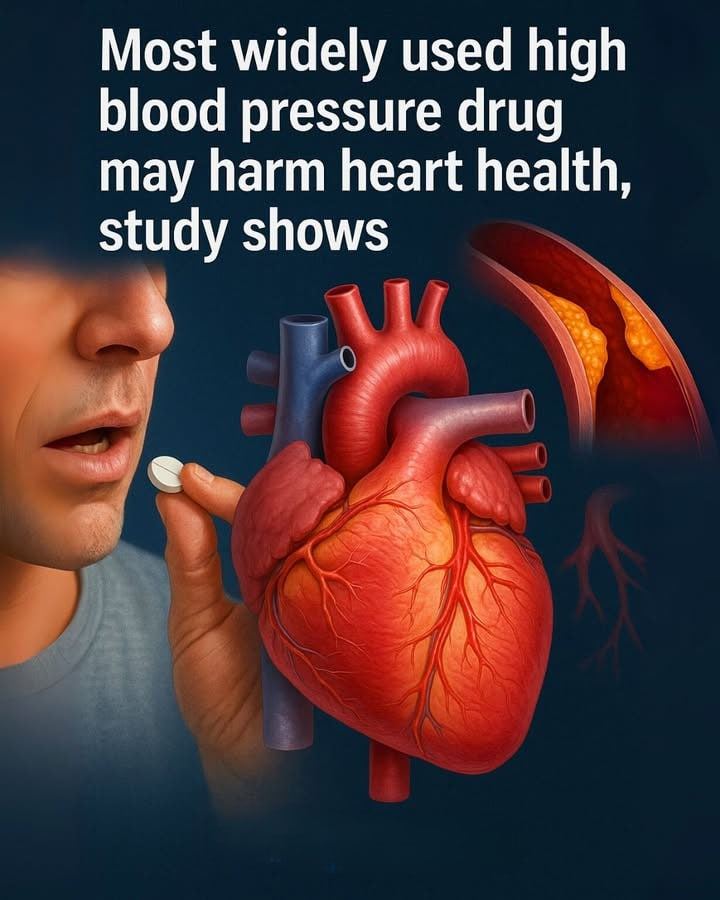
That headline is vague and can be misleading on its own.
🫀 What it actually means
Most studies like this are not saying blood pressure drugs are dangerous overall. They’re usually saying:
👉 In some groups of people, certain medications or long-term use patterns may be linked with slightly different heart risks, but not necessarily caused by the drug itself.
💊 Important clarification
“Common blood pressure drugs” can include many different classes, such as:
- ACE inhibitors
- Beta-blockers
- Calcium channel blockers
- Diuretics
These are widely used and, overall, are proven to reduce heart attack, stroke, and death risk.
🧠 What researchers usually find in these studies
When a study suggests “may affect heart health,” it often means:
- People taking the drug already had higher health risks
- Other conditions (age, diabetes, kidney disease) influenced results
- The study is observational, not proving direct harm
❤️ Key medical reality
Lowering blood pressure itself is strongly protective for the heart because high blood pressure increases risk of:
- Stroke
- Heart failure
- Heart attack
- Kidney disease
This is why doctors prescribe these medicines in the first place.
⚠️ When to be careful
You should only be concerned if:
- You experience side effects like dizziness, swelling, or very slow heart rate
- Your doctor says your current medication isn’t the best fit for you
- You mix or stop medications without guidance
🚫 What NOT to do
- Don’t stop blood pressure medication suddenly
- Don’t switch based on headlines
- Don’t assume all BP drugs have the same effects
🧠 Bottom line
This type of headline usually means:
“We found a possible association in a subgroup—not proof that the medication harms the heart.”
For most people, blood pressure medications are protective, not harmful when properly prescribed.
If you want, tell me the exact drug name (like amlodipine, metoprolol, lisinopril, etc.), and I’ll explain its real heart effects in simple terms.