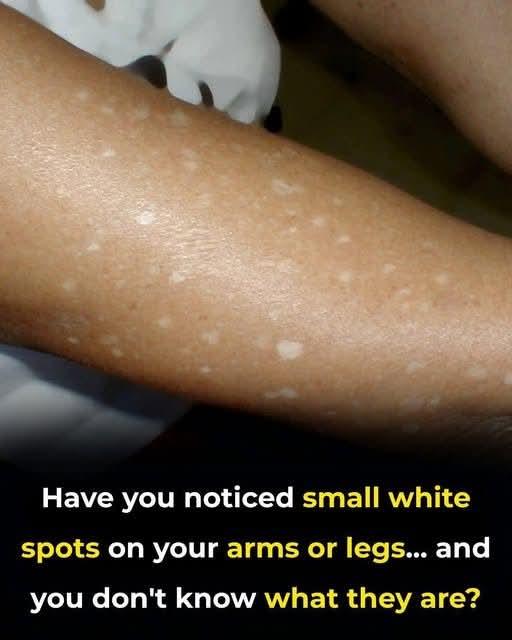
Small white spots on the arms and legs can come from several different causes—some harmless, some that may need treatment. The key is how they look, whether they spread, and if there are symptoms like itching or scaling.
Here are the most common possibilities:
🟤 1. Idiopathic Guttate Hypomelanosis (IGH)
Small white “confetti-like” spots, usually on sun-exposed areas like arms and legs.
- More common with age or sun exposure
- Flat, not itchy or painful
- Harmless
✔ No serious treatment needed
✔ Sunscreen can help prevent new spots
🌞 2. Sun Damage / Hypopigmentation
Skin loses pigment after long-term sun exposure.
- Often appears gradually
- More noticeable on darker skin tones
- No other symptoms
✔ Moisturizers + sun protection help prevent worsening
🦠 3. Fungal Infection (Tinea Versicolor)
Caused by yeast overgrowth on skin.
- Can be white, light brown, or patchy
- May have mild itching or fine scaling
- More noticeable after sweating
✔ Treated with antifungal creams or shampoos
✔ Can recur in hot/humid climates
🧴 4. Eczema or Post-Inflammatory Hypopigmentation
White patches after skin irritation, rash, or scratching.
- Skin was previously inflamed
- Common in children or people with eczema history
- Usually fades slowly over time
✔ Moisturizing helps recovery
⚪ 5. Vitiligo
A condition where skin loses pigment completely.
- White patches with clear borders
- Can spread over time
- May affect hair color in the area
This is linked to an autoimmune condition like vitiligo
✔ Needs dermatologist evaluation
✔ Treatments exist (creams, light therapy), but no instant cure
🚨 When to See a Doctor
Get checked if:
- Spots are spreading quickly
- They become pure white with sharp edges
- You also notice hair whitening in the area
- It’s affecting confidence or appearance
💡 Bottom Line
Small white spots on arms and legs are most often harmless (sun damage or minor pigment changes), but sometimes can be fungal infections or vitiligo.
If you want, I can help you identify your exact case if you describe:
- size
- whether it itches
- how long you’ve had them
- whether they are spreading