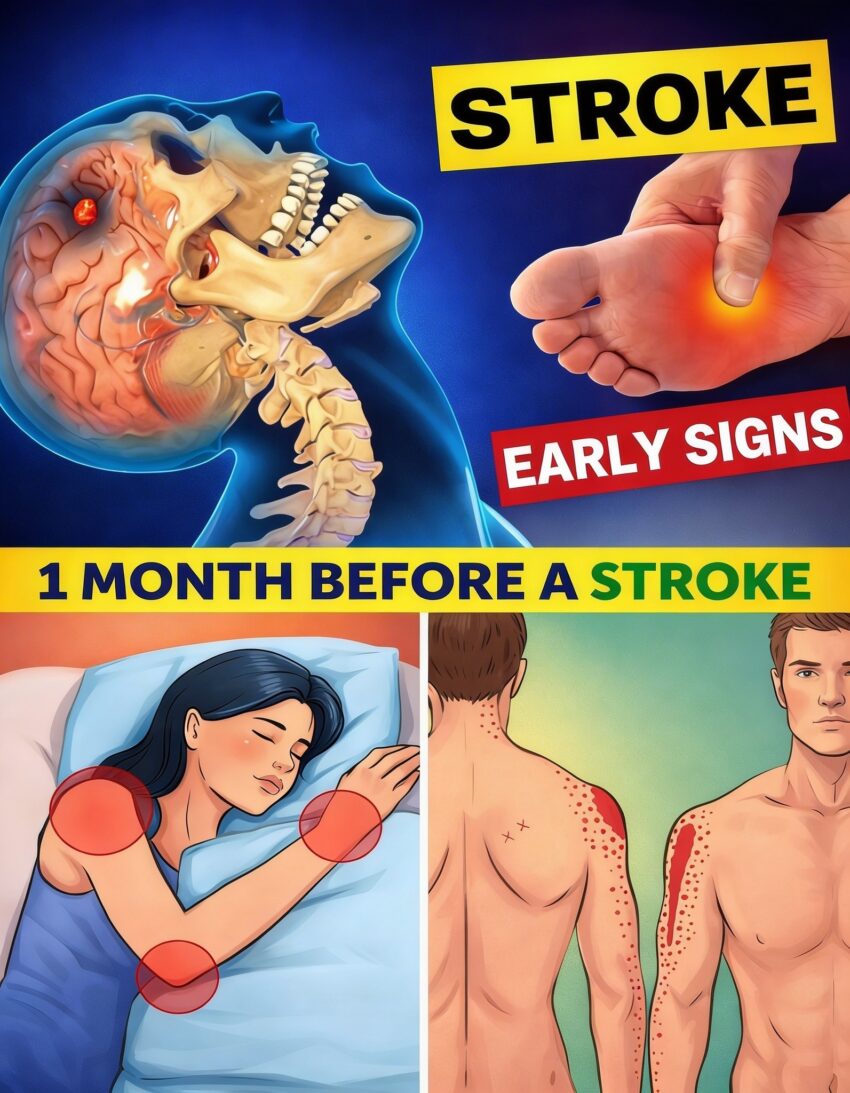
That headline blends real medical facts with a misleading promise. A Stroke doesn’t usually give you a neat “one-month warning,” but the body can send earlier signals—especially brief episodes called Transient Ischemic Attack (TIA). These are serious and often happen hours, days, or sometimes weeks before a major stroke—not on a predictable timeline.
⚠️ Possible warning signs
These symptoms can appear suddenly and may go away quickly—but they still require urgent care:
- Weakness or numbness on one side (face, arm, or leg)
- Slurred or difficult speech
- Confusion or trouble understanding
- Sudden vision problems (blurred, double, or loss of vision)
- Dizziness, loss of balance, or coordination
- Severe unexplained headache
- Brief “episodes” of any of the above (possible TIA)
A quick way to recognize the most critical signs is FAST:
- Face drooping
- Arms weakness
- Speech difficulty
- Time to seek emergency help immediately
🛡️ What actually helps prevent stroke
No viral “9 tips” shortcut—just consistent, proven habits:
- Keep blood pressure under control (top priority)
- Manage conditions like Type 2 Diabetes and high cholesterol
- Stop smoking
- Stay physically active (even daily walking helps)
- Eat a balanced, heart-healthy diet
- Maintain a healthy weight
- Limit alcohol
- Take prescribed medications as directed
🚨 The key takeaway
If you or someone else has even temporary stroke-like symptoms, don’t wait to see if they pass. A TIA is often a warning that a major stroke could follow soon.
Those headlines try to create a false sense of timing and control. In reality, speed of response matters far more than spotting a “list” in advance.