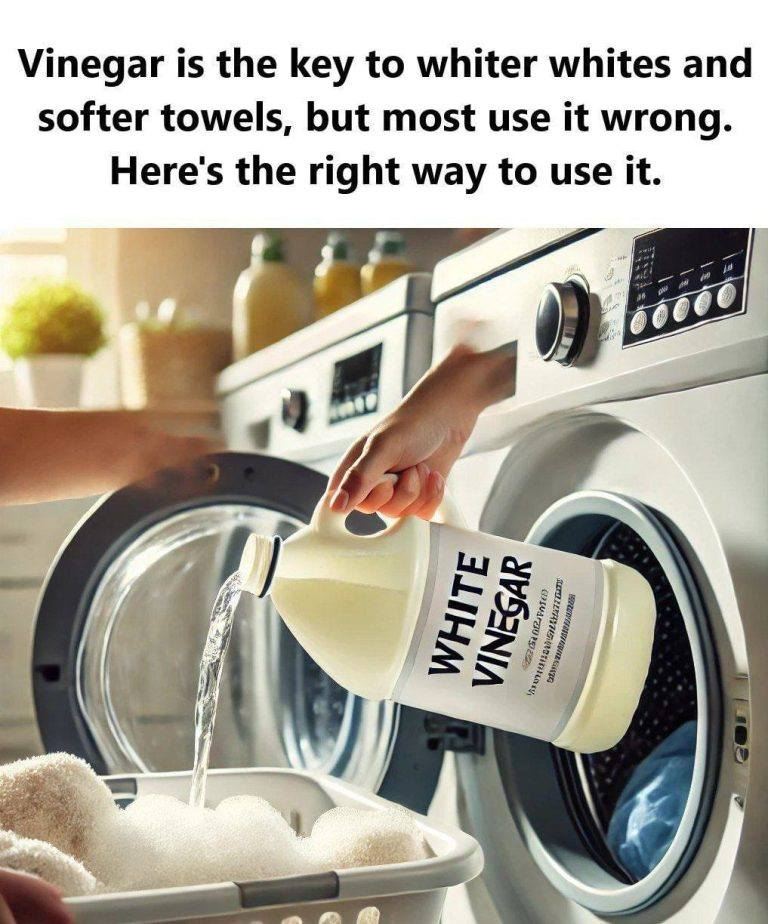
Vinegar can absolutely help your laundry—but the “miracle hack” only works if you use it the right way. Used incorrectly, it can do nothing…or even damage fabrics and your machine.
Here’s the correct, practical guide 👇
🧼 Why Vinegar Works in Laundry
The active component in Acetic acid helps to:
- Break down detergent residue
- Dissolve mineral buildup (hard water)
- Neutralize odors
- Soften fabric naturally
🧺 How to Get Whiter Whites
✔️ Method (Rinse Boost)
- Add ½ to 1 cup white vinegar to the rinse cycle
- Wash as usual with detergent
👉 Why it works: it removes leftover soap and minerals that make whites look dull.
✔️ Method (Pre-Soak for Dingy Whites)
- Mix:
- 1 cup vinegar
- 1 basin of warm water
- Soak clothes for 1–2 hours, then wash normally
🧖♀️ How to Make Towels Soft Again
✔️ Deep Clean Reset (Best Method)
- Wash towels with hot water + 1 cup vinegar (no detergent)
- Run a second cycle with ½ cup baking soda
- Dry normally
👉 This removes buildup that causes stiffness.
⚠️ The Mistakes Most People Make
❌ Mixing with Bleach
Never mix vinegar with Chlorine bleach
→ Creates toxic chlorine gas 🚫
❌ Adding It with Detergent
- Vinegar can cancel out detergent effectiveness
- Always use it in the rinse cycle, not the wash cycle
❌ Using Too Much
- Overuse can wear down rubber seals in washing machines over time
- Stick to ½–1 cup max
❌ Using on Certain Fabrics
Avoid vinegar on:
- Elastic (spandex)
- Silk
- Delicate blends
🌟 Extra Uses
- Removes mildew smell from clothes
- Helps reduce pet hair sticking
- Keeps washing machine fresh (run an empty cycle with vinegar)
🧠 Quick Summary
- Use vinegar in the rinse cycle
- Great for whitening + softening
- Don’t mix with bleach
- Don’t overuse
If you want, I can share a complete natural laundry system (vinegar + baking soda + lemon) or a stain-removal chart for every fabric type.